The Future of Jobs in the Age of AI Automation
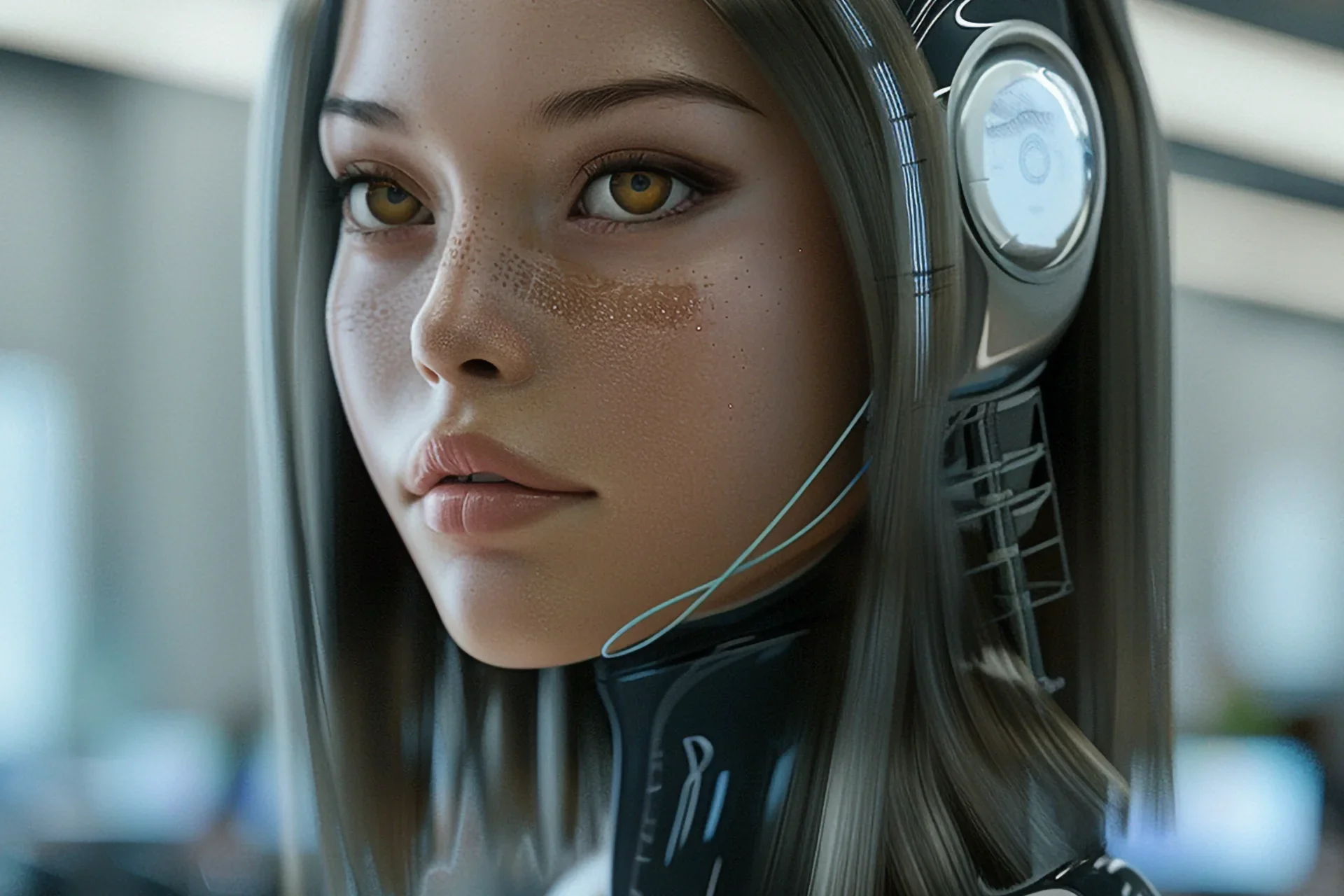
For decades, technology has quietly reshaped industries, but the shift happening today is unlike anything we’ve experienced before. Artificial intelligence is no longer just a support tool; it is becoming a collaborator, a decision maker, and in many cases, an independent worker. As we step into a new era, the future of jobs is being rewritten in real time, and the changes ahead are more surprising than most people expect.
AI Isn’t Replacing Jobs, It’s Replacing Job Components
The biggest misunderstanding about AI is the fear that it will sweep away entire professions overnight. But the reality is far more complex, and far more interesting. AI doesn’t eliminate jobs; it dissects them. It identifies the repetitive parts that don’t need human creativity, judgment, or emotion and automates only those components. What remains of the human layer is still essential.
Instead of a world where people are unemployed, we are moving towards a world where jobs will become hybrid, where the best of human qualities and the precision of machines will be meshed together.
1. AI-Powered Lawyers: Redundant at Research but Not at Strategy
Lawyers spend nearly 60% of their time on document heavy tasks reviewing contracts, scanning case law, and organising evidence. AI now automates this part in seconds.
But the core of legal work, legal interpretation, persuasive argument, negotiation, empathy with clients cannot be automated.
AI assisted lawyers are emerging who:
- Use machine learning tools to instantly analyse thousands of pages
- Assess risk in contracts with automated red flag detection
- Build stronger cases with AI generated insights
- Spend more time on courtroom strategy and human interaction
AI doesn’t replace the lawyer, it frees the lawyer from busywork, allowing them to focus on the highest value parts of their profession.
2. Digital Twin Engineers: A New Role That Didn’t Exist a Decade Ago
The “digital twin” refers to an electronic duplicate of an object, a system, and even an entire plant. This is a fast-growing sector because firms are interested in modeling failures, modeling ideas, and optimizing production without having to invest millions in modeling.
Digital Twin Engineers now:
- Build virtual versions of manufacturing plants, aircraft engines, supply chains
- Run simulations to predict breakdowns or find efficiency gaps
- Help companies test hundreds of scenarios before real implementation
- Prevent accidents by identifying hidden risks early
This role blends engineering, data science, and AI modeling making it one of the most futuristic careers created purely because of AI.
3. AI Enhanced Teachers: Personalising Learning at Scale
Traditional classrooms struggle with one size fits all teaching. Every student learns differently, but teachers often lack the time or tools to give individualised attention.
AI enhanced teachers change that by using intelligent systems that:
- Track student performance in real time
- Identify where each child struggles
- Suggest customised lessons, quizzes, and explanations
- Provide data that helps teachers adjust their teaching style
Teachers then spend more time:
- Guiding students
- Encouraging creativity
- Building emotional connection
- Providing support that no machine can replicate
The teacher now has a new companion for the classroom. The learner gets a better experience. The AI acts as a learning companion.
The Big Picture: AI Is Expanding, Not Shrinking, Human Potential
A decade ago, none of these positions existed, while today they are transforming industries altogether. This illustrates that the true effect of AI is not job destruction, but job transformation.
A New Category of Jobs Will Be Created
An interesting trend researchers highlight is the rise of “bridge jobs” roles that sit directly between human expertise and machine intelligence. These roles act as translators, auditors, and supervisors of automated systems.
Here are a few categories expected to grow rapidly:
1. AI Quality Analysts
These professionals check biases, hallucinations, and errors generated by AI models. As companies become more dependent on automation, auditing AI systems becomes essential.
2. Human Centered Designers
Instead of designing products, they design experiences that blend digital and human interactions. Their job is to ensure that automation still feels personal.
3. Synthetic Data Creators
The industry that has several applications like health, airlines, and robotics use artificial data generation for training models for their sensitive data.
These new jobs indicate that the future of employment is not shrinking; rather, it is diversifying.
The Rise of “Meta Skills”
AI can analyse, predict, and optimise, but it still cannot “want,” “feel,” or “imagine.”
This makes certain human abilities more valuable than ever. Researchers call these meta skills, the deep capabilities that enable flexible thinking:
- Problem framing: understanding what problem actually needs solving.
- Contextual judgment: seeing what algorithms miss.
- Creative synthesis: combining unrelated ideas into breakthrough concepts.
- Ethical reasoning: weighing consequences automation cannot interpret.
These skills will determine who thrives in an AI driven workplace.
Workers Who Adapt Will Become More Valuable, Not Less
One insight often ignored: automation increases the value of human workers who know how to use it. A marketer using AI tools can outperform an entire team from a decade ago. A single programmer with AI support can build products that once required multiple specialists.
This doesn’t just change productivity, it changes opportunity.
It levels the playing field.
The real AI automation impact is not job loss, it is the redistribution of power from large institutions to individuals who master the tools early.
The New Rule: Don’t Compete With AI, Leverage It
The people who will win in the next decade will not be the hardest workers; they will be those who work smarter with intelligent systems.
They will:
- Apply AI technology to accelerate learning
- Create Hybrid Human AI Workflows
- Continuously evolve their skills
This is the real future taking shape, a world where AI doesn’t replace humans but amplifies them.