
How AI Agents for Business Automation Are Evolving Into Autonomous Digital Workers
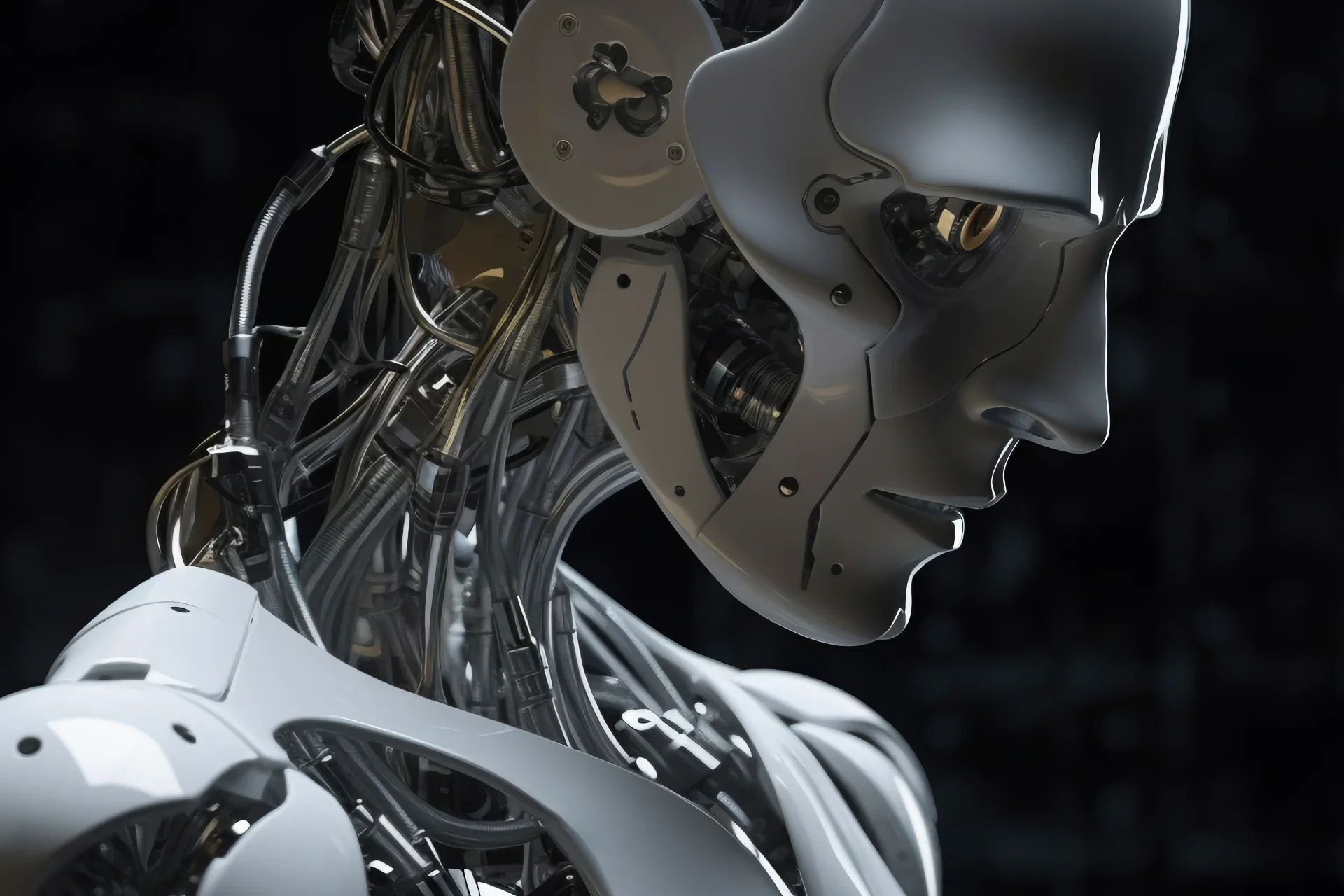
The enterprise automation landscape has transformed in 2025. Companies are no longer deploying static chatbots, they’re scaling autonomous digital workers that execute full, cross system workflows. These new AI agents for business automation, powered by LLM reasoning and contextual memory, can perceive, plan, act, and learn with minimal supervision.
According to research from Multimodal and PwC, almost 80% of businesses are using AI agents in some capacity, while 60% of new enterprise deployments include agentic capabilities.
The result: AI no longer assists humans, it collaborates, orchestrates, and scales operations to an unprecedented degree.
What Are Agentic or Autonomous AI Systems?
Agentic AI systems represent the next stage of automation, autonomous, goal driven entities capable of decision making, adaptability, and multi modal interaction. Rather than responding to tasks, they initiate, execute, and optimise workflows toward business objectives.
McKinsey defines this model as the “superagency”: a dynamic collaboration between human oversight and AI led orchestration. Such systems connect CRM, ERP, ticketing, and analytics tools, ensuring tasks flow seamlessly from one platform to another without bottlenecks.
Beyond Chatbots: From Conversations to Execution
Chatbots answered queries. Agentic AI executes missions.
Modern AI Agents for Business Automation now drive hyperautomation, integrating data pipelines, APIs, and ML models.
Examples from 2025 deployments show this shift clearly:
- DevOps Agents: Automatically detect build errors, rerun pipelines, and perform root cause analysis
- Procurement Agents: Autonomously compare vendors, process purchase orders, and validate invoices.
- Finance Agents: Manage spending thresholds, perform reconciliations, and ensure audit compliance
- Customer Experience Agents: Monitor support queues, predict sentiment, and escalate issues proactively
These digital workers unify once disconnected enterprise processes into a single Agentic Workflow system, proactive, adaptive, and uninterrupted.
Real World Examples of Agentic AI in Business
1. DevOps Orchestration
Companies like SuperAGI and GitHub Copilot are pioneering Autonomous AI Agents that troubleshoot deployment errors, run patches, and auto correct configurations, cutting dev cycles by up to 35%.
2. Supply Chain Intelligence
At IBM and Oracle, supply chains powered by autonomous decision making agents handle vendor contract renewals, reroute logistics, and optimise warehousing in real time.
3. Financial Automation
Enterprises using ERP embedded agents (e.g., Oracle Fusion AI) reduced invoice reconciliation times by 70% and improved compliance tracking.
4. Customer Service Optimisation
eCommerce platforms integrating AI Agents for Business Automation reported 20–30% higher sales and 25% lower cart abandonment due to faster response cycles and personalised support.
Emerging 2025 Trends: The Agentic Leap
- Self healing Multi Agent Systems
Agents autonomously recover from workflow errors or API outages through rerouted logic paths and peer assistance networks. - KPI Driven Feedback Loops
Every autonomous agent tracks its own performance, optimising processes based on success metrics like cycle time and resolution rate. - Agentic Workflow Ecosystems
Organisations are shifting from deploying isolated Autonomous AI Agents to orchestrating collaborative, interoperable agent systems, a foundation for new digital economies. - Edge Deployed Agents
Autonomous processes running on IoT and edge devices deliver low latency, offline operations across factories, retail, and logistics nodes. - No Code Agent Frameworks
Low code tools enable non technical teams to configure AI Agents for Business Automation, massively accelerating innovation but also increasing “shadow AI” risks.
Benefits for Businesses
- Speed and Efficiency: Reduces manual handoffs across functions via continuous automation.
- Scalability: Processes scale horizontally with agent replication.
- Compliance Automation: Built in audits ensure GDPR, ISO, and SOC adherence.
- Cost Reduction: Enterprises report 2× faster project delivery and 30–40% operational savings.
- Strategic Focus: Human workers focus on design, ethics, and direction, AI handles execution.
Risks and Governance
Where autonomy increases, so do risks.
- Hallucination & Faulty Actions: Agents acting on incomplete data can trigger chain errors.
- Shadow IT Creation: Independent low code agents escaping governance.
- Ethical Gaps: Who is accountable when decisions lack transparency?
A 2025 Blue Prism survey found that 78% of business leaders mistrust fully autonomous agents without human in loop control. Hence, “governed autonomy” , a balance of freedom and oversight, is the dominant implementation model.
The Future: Humans and AI as Co Pilots
The work dynamic is evolving into what UiPath calls the “Agentic Workforce” blending human judgment with the reliability of Autonomous AI Agents.
By 2027, Gartner predicts that 60% of digital teams will operate in hybrid human AI ecosystems. Humans serve as orchestrators; agents perform actions. Together, they maximise creativity, compliance, and speed.
This fusion doesn’t replace jobs, it redefines them, forming the cornerstone of collaborative intelligence.
Conclusion
AI Agents for Business Automation are no longer theoretical, they’re reshaping the enterprise landscape in measurable, scalable ways. As adoption accelerates, organisations must design frameworks that prioritise governance, interoperability, and human control.
The autonomous digital workforce era is underway. Autonomous AI Agents aren’t just transforming business automation, they’re elevating how enterprises think, act, and evolve.